Neural acceleration, multi-microphone audio processing and device security in a compact package, supporting on-device intelligence and access to FuuVo cloud language services.
Local chip functionality remains available without an internet connection. Cloud connectivity expands services rather than replacing the local operating path.
YULING 408 / XIN YI DING
FVX-AI408N
● OFFLINE / LOCAL OPERATION
Four-microphone noise reduction, local wake detection, encrypted recording and basic offline translation for frequently used core languages.
4-mic noise reduction & local wake
Encrypted recording
Core-language basic offline translation
↗ CONNECTED / SERVICE EXTENSION
Seamless access to the FuuVo.com multilingual neural cloud engine unlocks ultra-low-latency simultaneous interpretation across more than 100 languages.
Product functionality statement supplied by FuuVeXia. Core offline language lists, deployed model packs, storage configuration and characterized translation latency are defined in controlled product / integration releases. Public diagrams retain conceptual functional pins pending the formal datasheet.
FVX-AI408N
Designed into your system.
Review the operating envelope, interfaces and evaluation conditions as part of a complete design-in process.
NPU compute¹0.8 TOPS · INT8
Process22 nm ULP SoC + crypto die
PackageSiP · 5.5 × 5.5 mm
DESIGNED FOR INTEGRATION
Edge AI audio SiP for connected wearables
01
Process audio at the edge
Beamforming, echo cancellation, noise suppression and keyword spotting form the front end of a connected voice experience.
02
Accelerate local inference
INT8 neural acceleration supports model deployment within device memory, bandwidth and power constraints.
03
Connect securely to language services
A device credential supports authenticated service access. End-to-end translation latency depends on model, network and streaming configuration.
SYSTEM VIEW
Architecture at a glance.
01
MICROPHONE ARRAY
→
02
DSP / AUDIO FRONT END
→
03
NPU & SECURITY
→
04
GATEWAY / FUUVO
Previous functional flow · retained
01MICROPHONE ARRAY
→
02DSP / AUDIO FRONT END
→
03NPU & SECURITY
→
04GATEWAY / FUUVO
Functional concept only. Not a circuit schematic or verified die floorplan.
TECHNICAL OVERVIEW
Start with the essentials.
Preliminary specifications supplied for this portfolio. Request the controlled datasheet and evaluation conditions before design-in.
¹ Measurement conditions and characterization reports pending confirmation. ² Detailed configuration or rating definition must be confirmed. Availability and qualification are subject to engineering review.
FVX-AI408N specifications
NPU compute¹
0.8 TOPS · INT8
Process
22 nm ULP SoC + crypto die
Package
SiP · 5.5 × 5.5 mm
Audio front end
4-mic · AEC / ENC / KWS
Connectivity²
Bluetooth 5.4
Voice workload power¹
8.2 mW typical
APPLICATION FOCUS
Built around your system.
01
AI glasses
Discuss operating conditions, interfaces and validation requirements with the engineering team.
02
Translation earbuds
Discuss operating conditions, interfaces and validation requirements with the engineering team.
03
Voice capture
Discuss operating conditions, interfaces and validation requirements with the engineering team.
ENGINEERING IN CONTEXT
A closer look.
Voice-enabled wearables
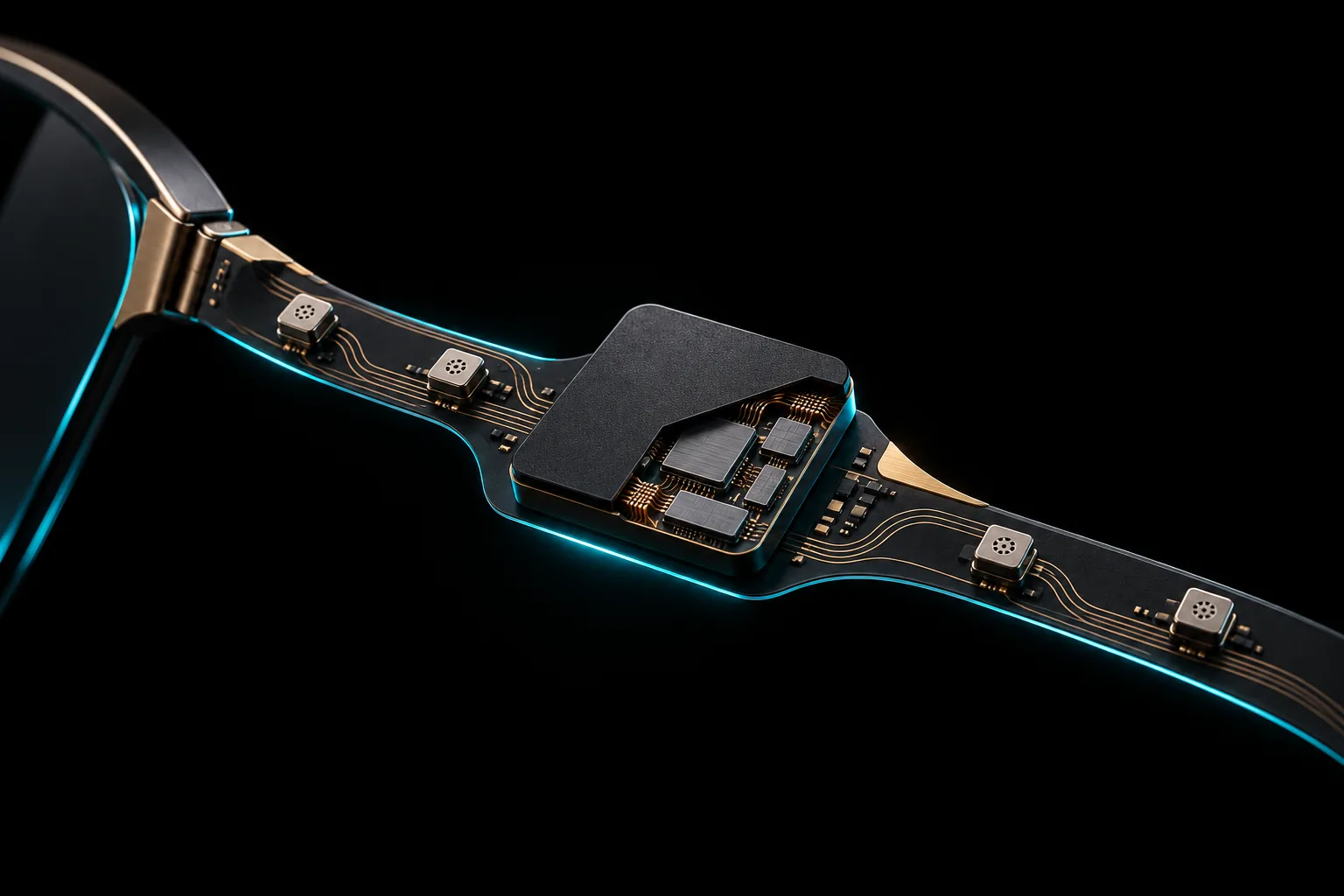
Original concept illustration · not evidence of owned facilities or actual products
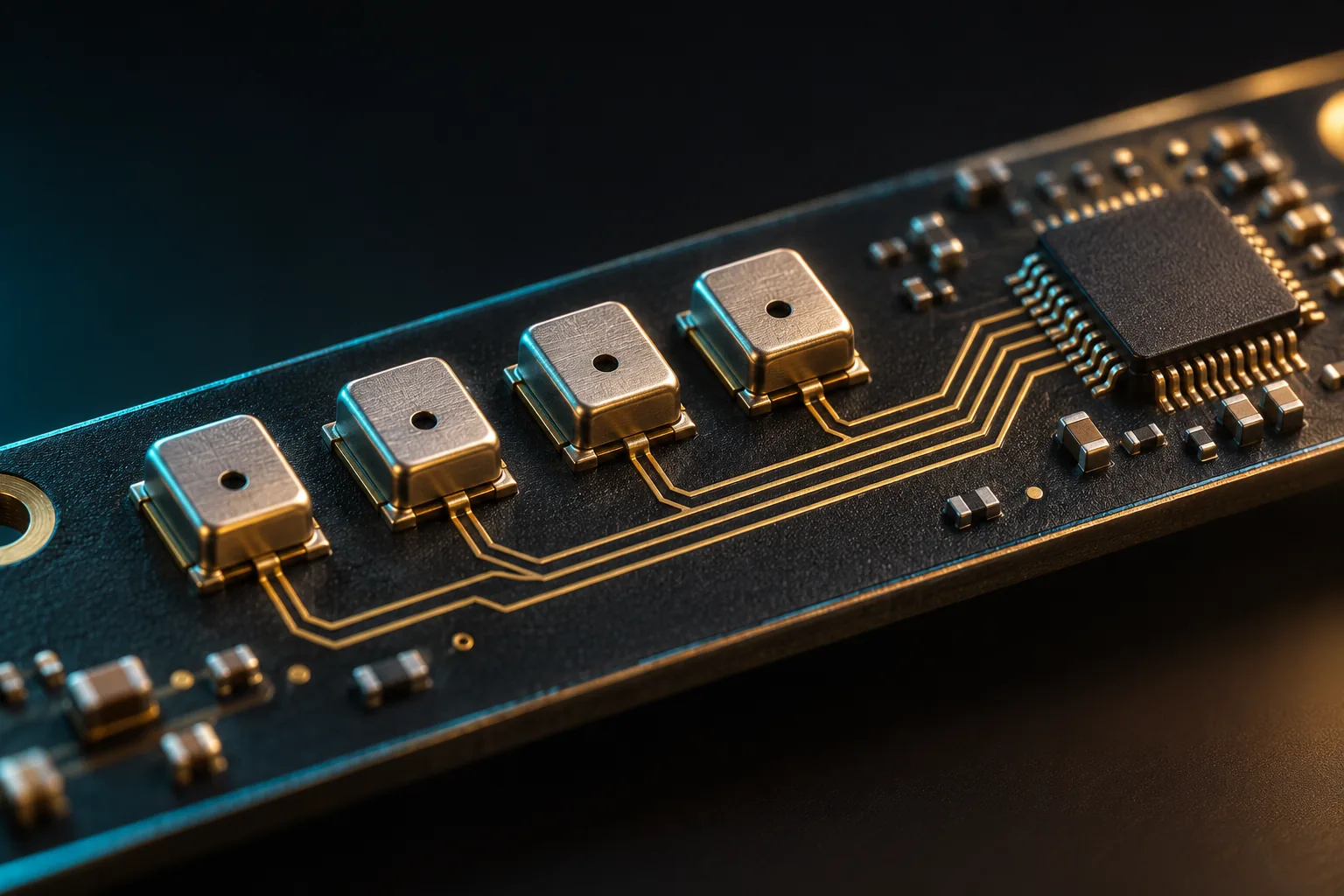
Audio front-end design
Original concept illustration · not evidence of owned facilities or actual products
Connect mechanical acoustics, local processing, wireless transport and cloud services in one engineering budget.
ENGINEERING IN FOCUS
Geometry before algorithms
Microphone spacing and mechanical placement influence the information available to the audio processor.
Original concept illustration · not a photograph of the released product or owned facilitiesENGINEERING IN FOCUS
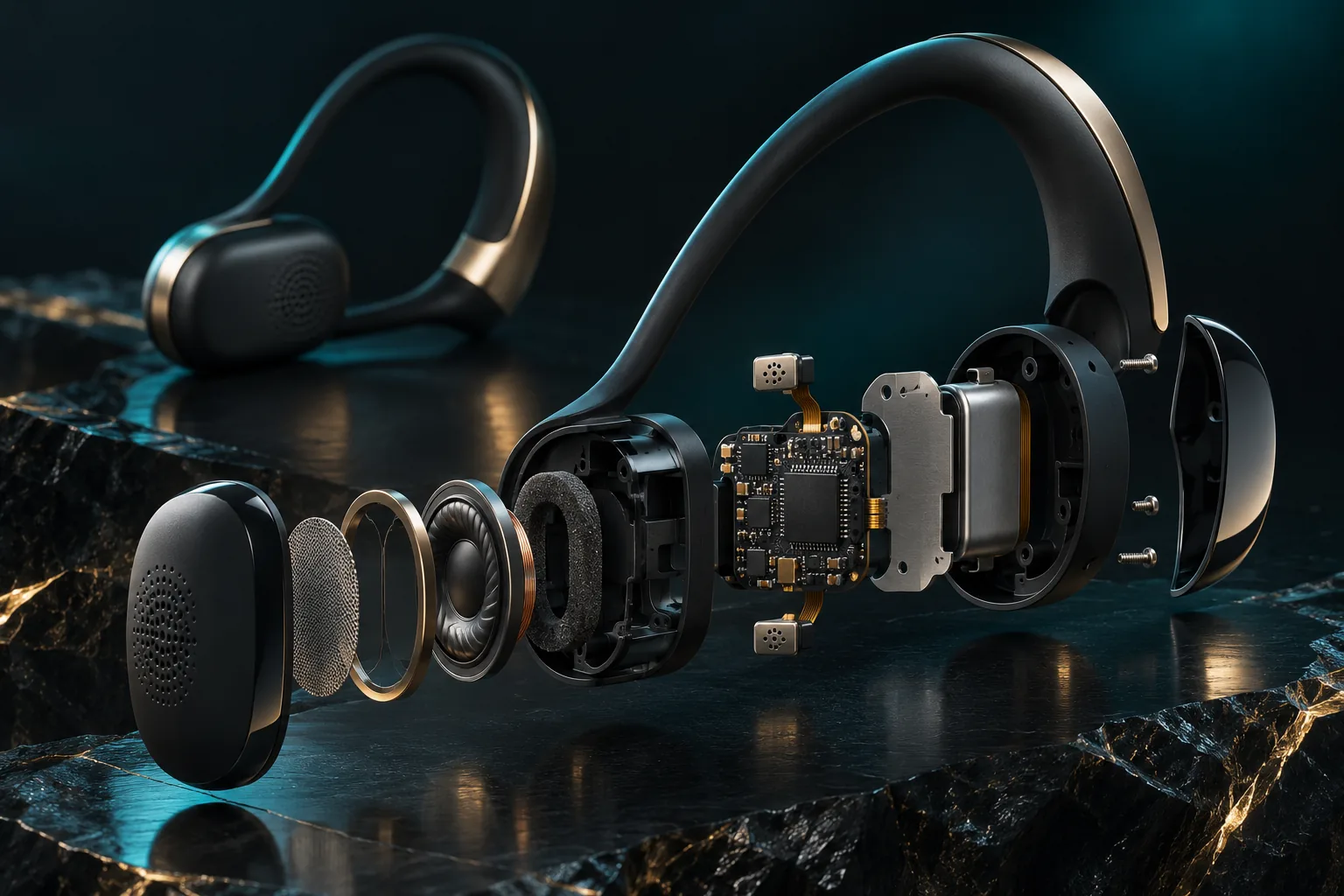
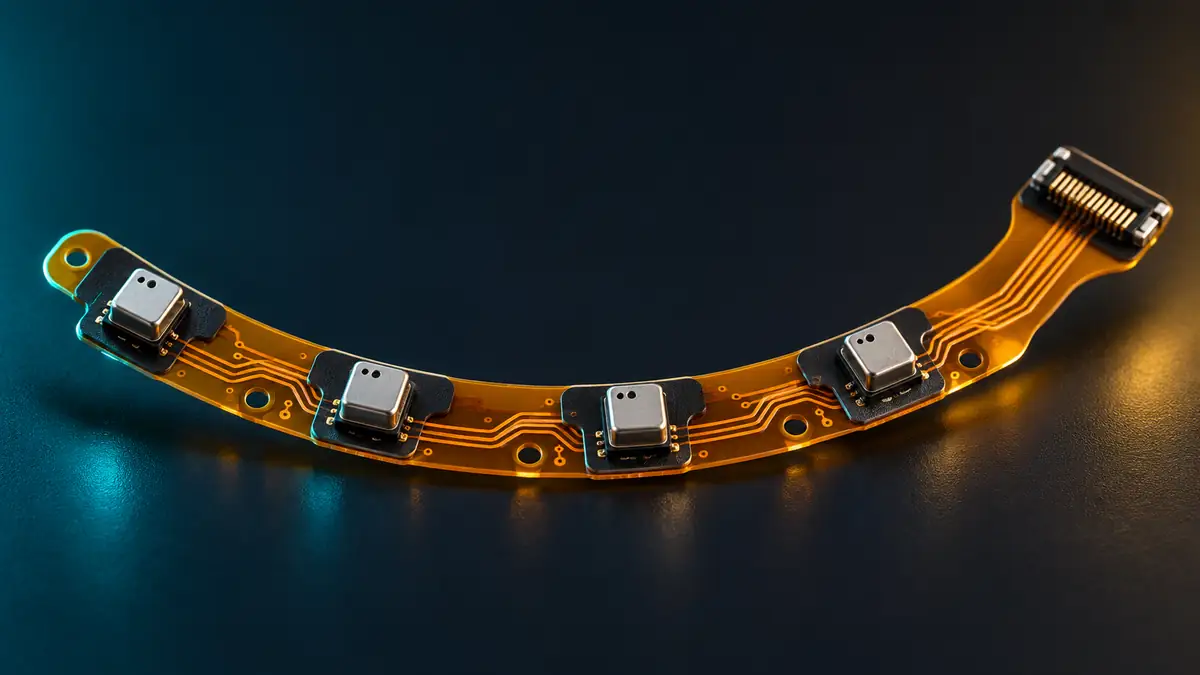
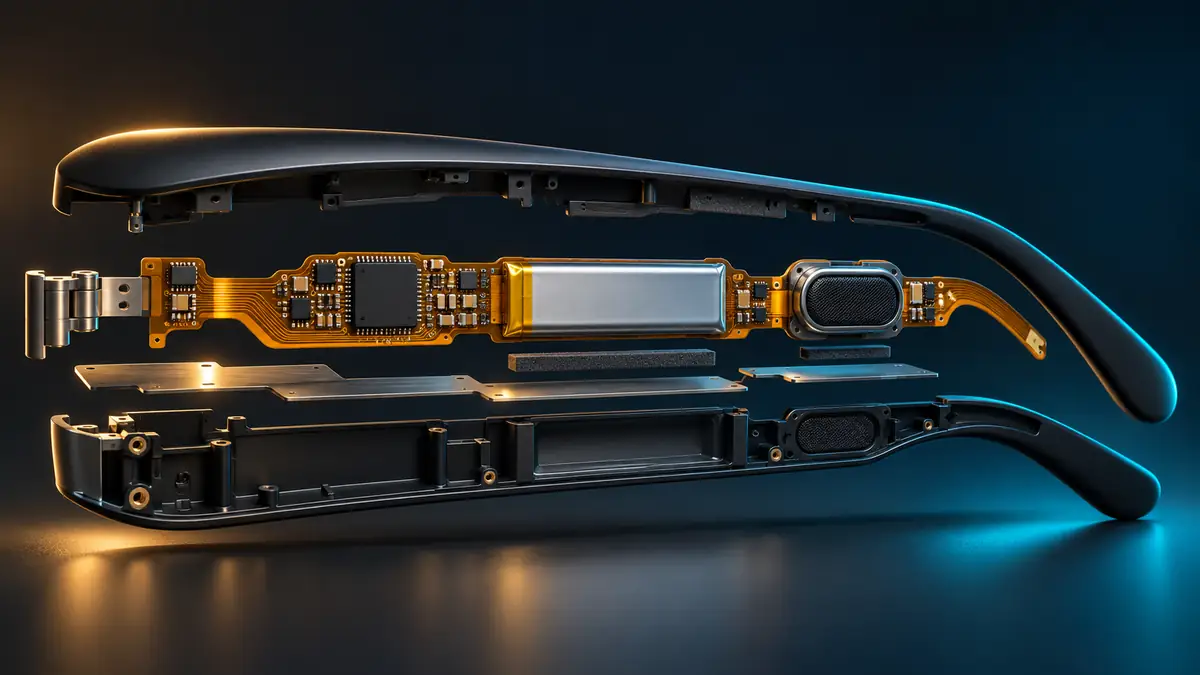
Integration inside a wearable
Coordinate board area, flex routing, battery placement and antenna clearance early in the design.
Original concept illustration · not a photograph of the released product or owned facilities
SYSTEM RESPONSIBILITIES
Define every boundary.
Functional design perspective; external circuits and interfaces require confirmation against the controlled specification.
01
Acoustic front end
Microphones → alignment → audio DSP
02
Local intelligence
Features → supported INT8 model → decision
03
Connected language service
Authenticated stream → cloud → playback
BOARD & SYSTEM INTEGRATION
From part selection to system design.
01
Budget memory alongside arithmetic
A deployable model needs weights, activations, buffering and supported operators. Quantization can change both accuracy and memory demand. Record the exact model revision, operator mapping and workload when assessing how the proposed NPU fits a product.
02
Design for speech in real environments
A quiet single-speaker recording does not represent wind, movement, reverberation or simultaneous speech. Include playback echo and user motion in evaluation. Compare processing configurations on the same recordings and avoid changing the reference corpus between tests.
03
Separate radio version from audio capability
A Bluetooth version number alone does not define the supported audio profiles, codecs, transport modes or interoperability. Confirm the complete feature set and applicable qualification for the final device. The preliminary Bluetooth 5.4 target is not a blanket LE Audio or dual-mode commitment.
External references describe general engineering principles; they do not validate or endorse this FuuVeXia product.
ENGINEERING IN FOCUS
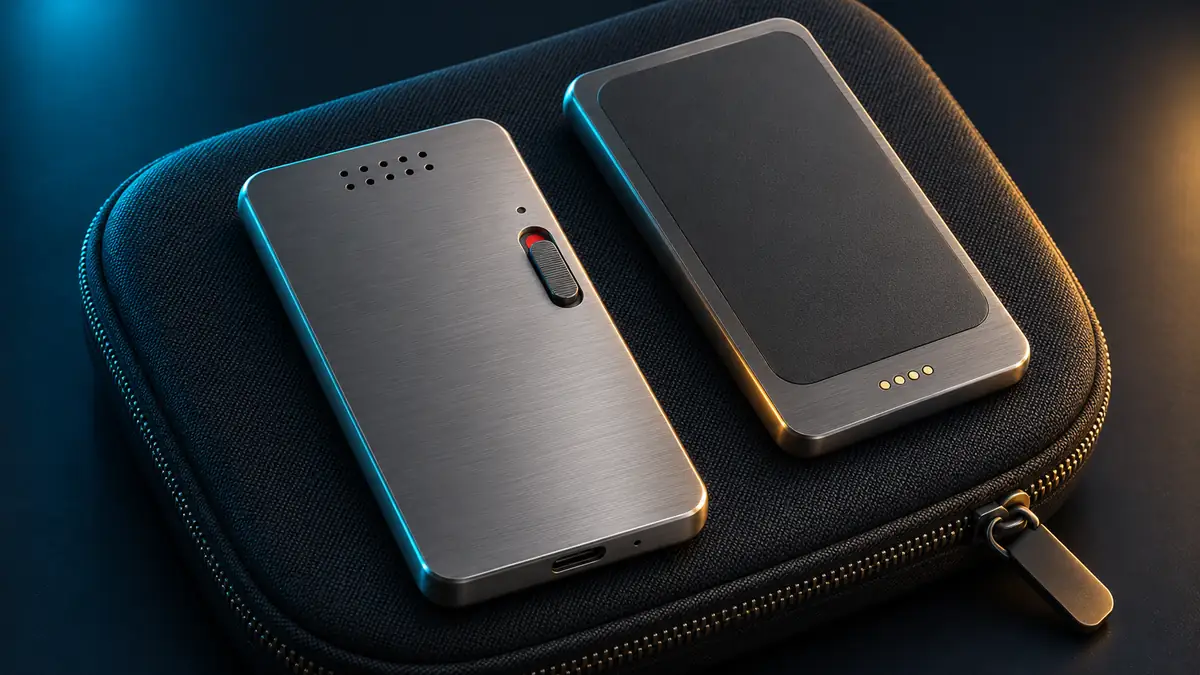
Enterprise voice capture
Design recording indicators, retention controls and network behavior alongside the audio pipeline.
Original concept illustration · not a photograph of the released product or owned facilitiesENGINEERING IN FOCUS
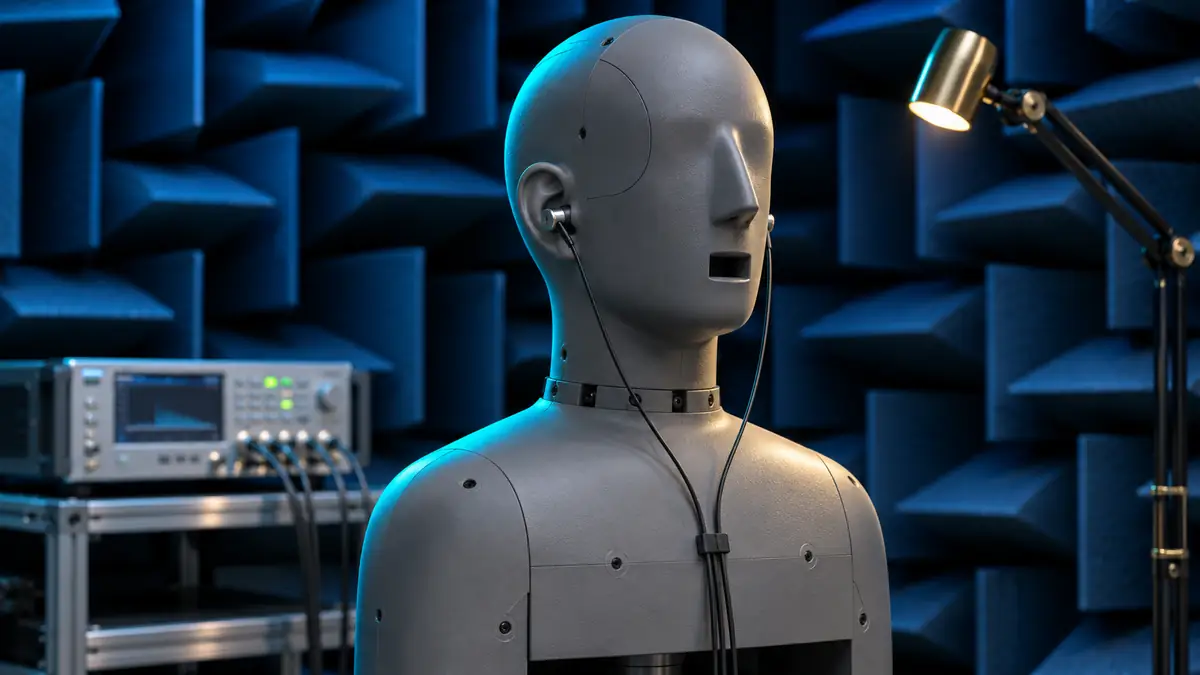
Repeatable acoustic evaluation
Controlled acoustic setups help compare placement, echo paths and processing configurations.
Original concept illustration · not a photograph of the released product or owned facilities
VERIFICATION PLANNING
A test plan you can discuss.
Evaluation
Define the conditions
Record the evidence
Acoustic capture
Specified geometry, distance and sound field
Signal quality and clipping behavior
Echo / double-talk
Known playback reference and overlap
Residual echo and speech preservation
Local inference
Named model, precision and operator mapping
Accuracy, latency and memory use
Streaming
Defined RTT, jitter, loss and language pair
First response and complete-output timing
Energy
Listen, infer, stream, playback and idle
Per-state power and duty-cycle energy
Service behavior
Offline, reconnect and credential expiry
User feedback, data handling and recovery
Planning matrix, not completed test results. Acceptance limits must be agreed against the current device revision and application requirements.
ENGINEERING INTERPRETATION
A latency budget is not a benchmark
An illustrative serial budget of 40 ms for local processing, 80 ms for the network and 160 ms for service and buffering adds to 280 ms. These are planning assumptions, not measured translation results. Real streaming may overlap stages, while queueing and network tails can increase delay.
40 ms + 80 ms + 160 ms = 280 msREPORT p50 / p95 + QUALITY + CONDITIONSIllustrative system reasoning · not a measured product benchmark
ENGINEERING QUESTIONS
Before you commit the design.
Does 0.8 TOPS predict translation speed?+
No. It is a preliminary arithmetic-throughput target. End-to-end translation depends on the deployed local and cloud models, memory, streaming policy and network conditions.
Is 8.2 mW the total wearable power?+
No. The supplied target concerns a specified voice workload whose conditions need confirmation. Battery budgeting must also cover radio, memory, sensors, playback and conversion losses.
Does the chip work without cloud connectivity?+
Yes. FVX-AI408N (Yuling 408 / Xin Yi Ding) independently supports four-microphone noise reduction, local wake detection, encrypted recording and basic offline translation for frequently used core languages. When connected, it seamlessly accesses the FuuVo.com multilingual neural cloud engine for ultra-low-latency simultaneous interpretation across more than 100 languages. Confirm the deployed language pack and device resource configuration in the released integration documentation.
Are SDKs and cloud-service terms already published?+
The current portal supports technical inquiries. Request the controlled SDK, supported platform list, service availability, data handling terms and pricing before committing an integration.
FVX-AI408N / NEXT STEPS
Bring the right inputs to the review.
Share your operating conditions, host platform, enclosure constraints and intended qualification requirements. Include the evidence and documentation your procurement team needs.