ADVANCED INTEGRATION

Heterogeneous SiP architecture

Partition by function. Integrate at the package. A practical view of die, substrate, interconnect and system trade-offs.

Discuss your design
SYSTEM DESIGN PERSPECTIVE FuuVeXia Engineering
Heterogeneous SiP architecture
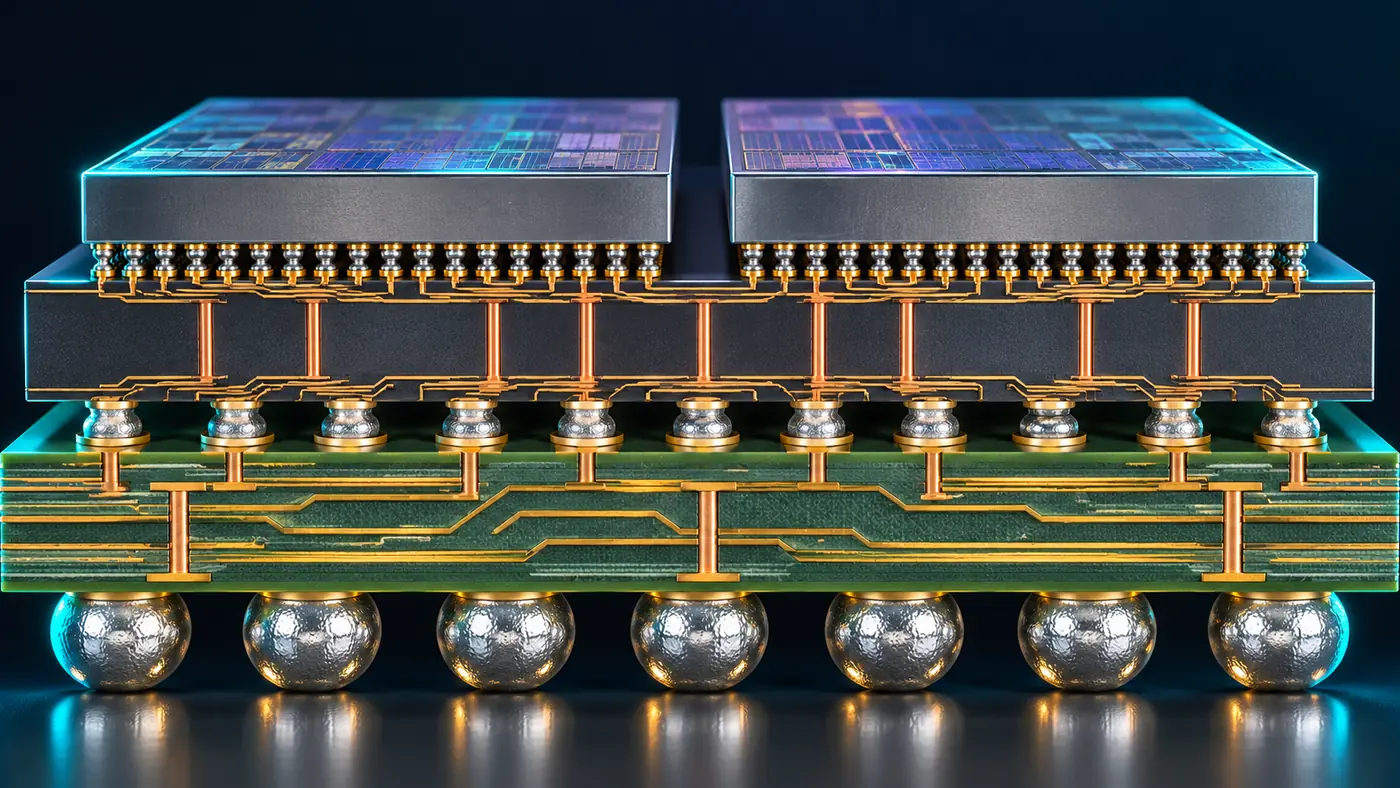
Original concept visualization
SYSTEM VIEW

The complete signal path.

Conceptual functional architecture. External components and interfaces depend on the final system design.

01

FUNCTIONAL DIES

→
02

SUBSTRATE ROUTING

→
03

INTERCONNECT + MOLD

→
04

SYSTEM INTERFACE

Previous functional flow · retained
01FUNCTIONAL DIES
→
02SUBSTRATE ROUTING
→
03INTERCONNECT + MOLD
→
04SYSTEM INTERFACE
01 / ENGINEERING

Choose the integration boundary

Analog, RF, compute and security functions do not always benefit from the same process node. A heterogeneous package can combine dies selected for different functions, but the interfaces between those dies still require electrical, timing and trust analysis.

02 / ENGINEERING

Co-design signal, power and heat

Substrate stack-up determines routing opportunities and return paths. Model supply impedance and aggressor-to-victim coupling alongside thermal paths. Shorter connections may help integration, but percentage improvements require a defined comparison design and measured conditions.

03 / ENGINEERING

Design test access before assembly

Known-good-die screening, interconnect coverage and final functional test must be planned together. A highly integrated package can reduce board-level access to individual functions. Provide a diagnostic strategy that remains usable after security lifecycle restrictions are applied.

DESIGN REVIEW

Make the requirements measurable.

Design considerationEvaluation focus
IntegrationDie partition and interface ownership
SubstrateStack-up, materials, escape routing
Power integrityImpedance target and decoupling placement
Test strategyDie screening, interconnect and final test

¹ Where shown: preliminary portfolio target, not a guaranteed production limit.

Before design-in

  1. Review package and board constraints together.
  2. Define the baseline before claiming area or crosstalk savings.
  3. Verify diagnostics across lifecycle states.
ENGINEER WHAT COMES NEXT

Your next design.
Our next conversation.

Talk to engineering