A dedicated security architecture combining PUF-based identity and hardware cryptographic engines for authenticated devices, protected credentials and secure provisioning.
Local chip functionality remains available without an internet connection. Cloud connectivity expands services rather than replacing the local operating path.
LOCAL HARDWARE AUTHENTICATION
FVX-SE108A
● OFFLINE / LOCAL OPERATION
Full local security-authentication functionality. No network required.
Local challenge / response
Device & consumable authentication
Pre-provisioned trust & local policy
↗ CONNECTED / SERVICE EXTENSION
Optional credential administration and service integration. Routine local authentication does not require a cloud connection.
Product functionality statement supplied by FuuVeXia. Core offline language lists, deployed model packs, storage configuration and characterized translation latency are defined in controlled product / integration releases. Public diagrams retain conceptual functional pins pending the formal datasheet.
FVX-SE108A
Designed into your system.
Review the operating envelope, interfaces and evaluation conditions as part of a complete design-in process.
Process55 nm embedded flash
PackageDFN-8 · 2 × 3 mm / WLCSP
Asymmetric cryptographyECC NIST P-256
DESIGNED FOR INTEGRATION
Secure element for device authentication
01
Device-bound identity
PUF-based identity is part of the security design. Response length, effective entropy and key derivation must be evaluated separately.
02
Hardware cryptography
ECC P-256, AES-256 and SHA-256 provide building blocks for authentication and protected communication.
03
Lifecycle-aware provisioning
Plan credential enrollment, verification, rotation and revocation as part of the complete device lifecycle.
SYSTEM VIEW
Architecture at a glance.
01
HOST CHALLENGE
→
02
SECURE ELEMENT
→
03
CRYPTOGRAPHIC RESPONSE
→
04
VERIFIER
Previous functional flow · retained
01HOST CHALLENGE
→
02SECURE ELEMENT
→
03CRYPTOGRAPHIC RESPONSE
→
04VERIFIER
Functional concept only. Not a circuit schematic or verified die floorplan.
TECHNICAL OVERVIEW
Start with the essentials.
Preliminary specifications supplied for this portfolio. Request the controlled datasheet and evaluation conditions before design-in.
¹ Measurement conditions and characterization reports pending confirmation. ² Detailed configuration or rating definition must be confirmed. Availability and qualification are subject to engineering review.
FVX-SE108A specifications
Process
55 nm embedded flash
Package
DFN-8 · 2 × 3 mm / WLCSP
Asymmetric cryptography
ECC NIST P-256
Symmetric / hash
AES-256 / SHA-256
Standby current¹
<150 nA
Authentication¹
<18 ms
APPLICATION FOCUS
Built around your system.
01
Battery authentication
Discuss operating conditions, interfaces and validation requirements with the engineering team.
02
Consumable identity
Discuss operating conditions, interfaces and validation requirements with the engineering team.
03
Industrial licensing
Discuss operating conditions, interfaces and validation requirements with the engineering team.
ENGINEERING IN CONTEXT
A closer look.
Security evaluation
Original concept illustration · not evidence of owned facilities or actual products
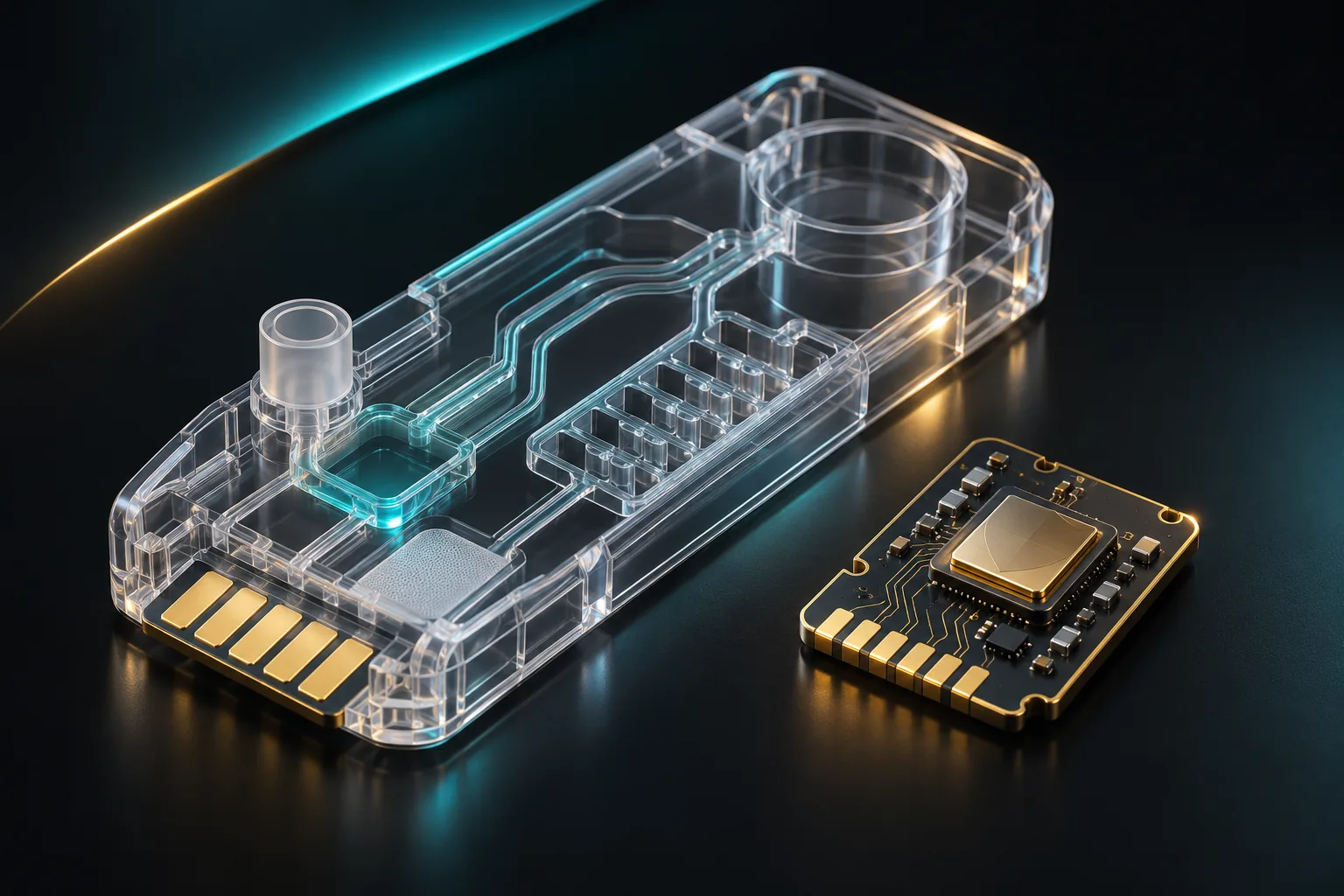
Consumable authentication
Original concept illustration · not evidence of owned facilities or actual products
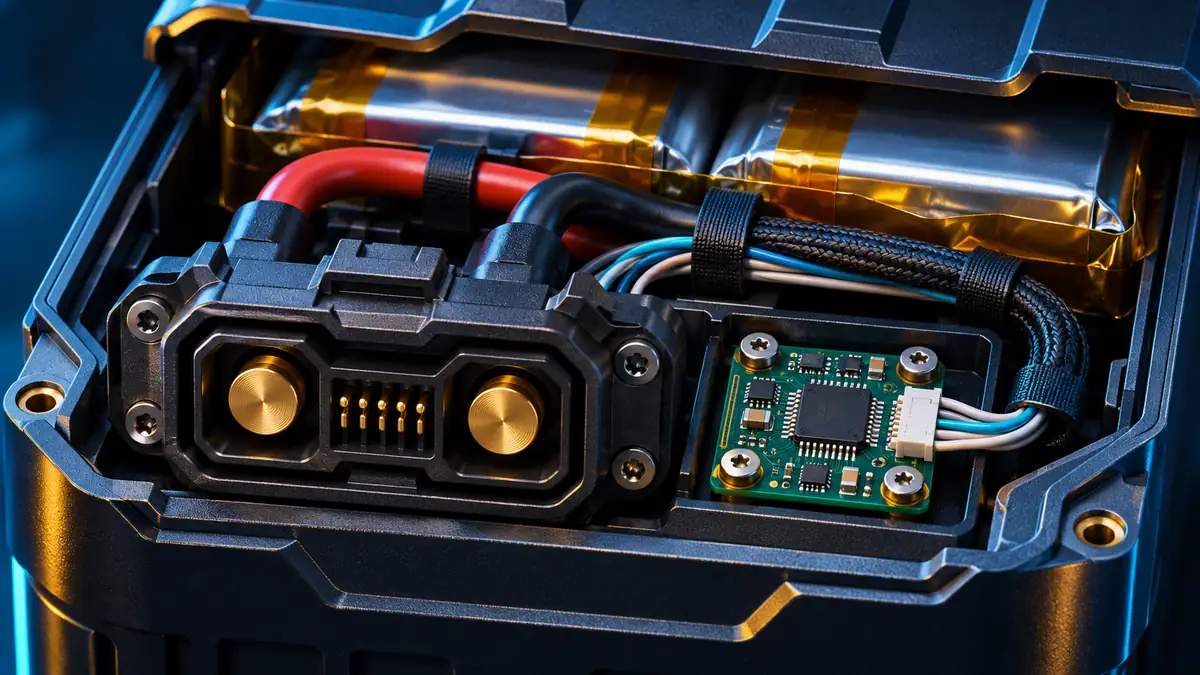
Authenticated battery systems
Original concept illustration · not evidence of owned facilities or actual products
A secure element belongs inside a system of enrollment, verification and service decisions. Explore the responsibilities on each side of the device trust boundary.
ENGINEERING IN FOCUS
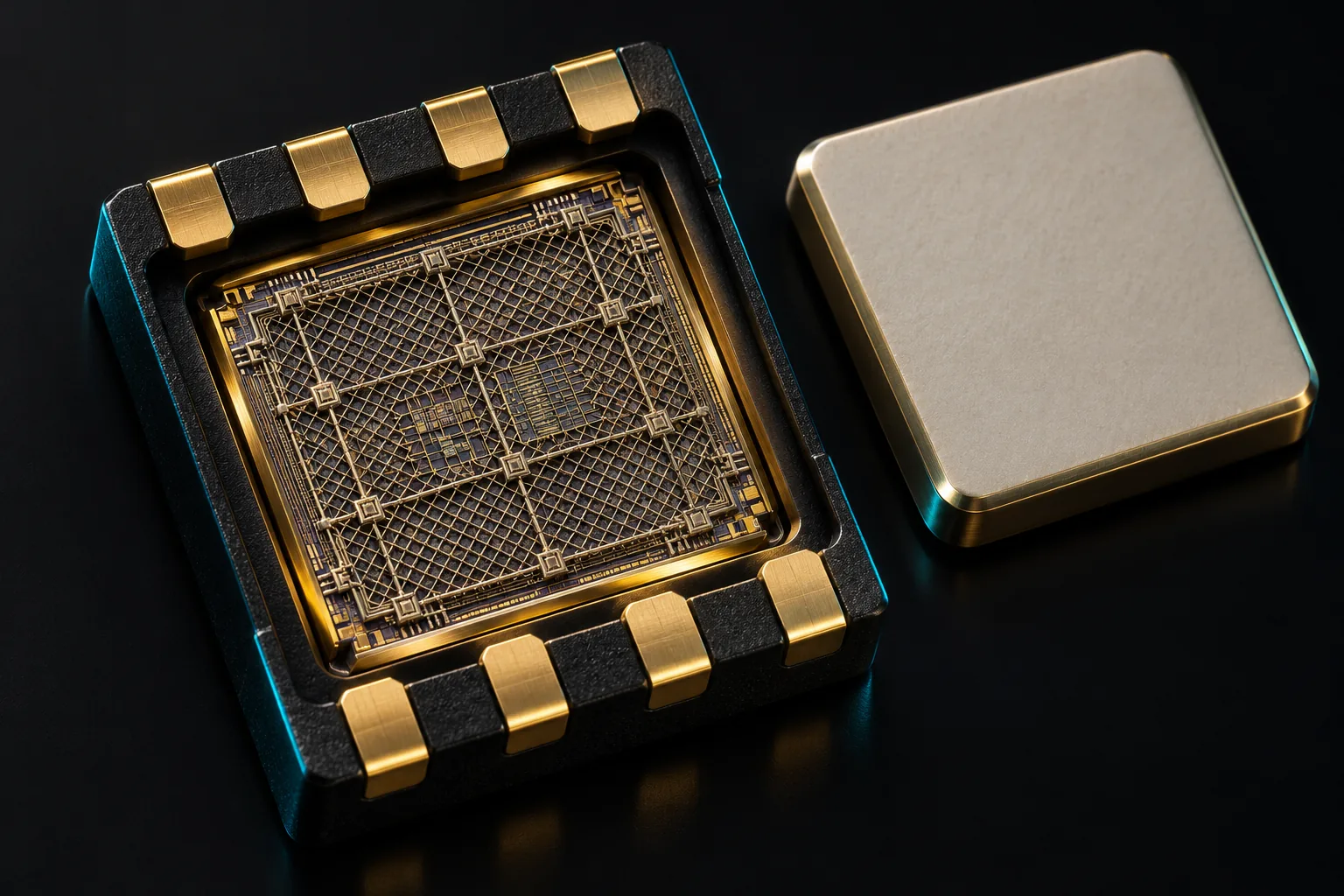
A compact authentication building block
Package choice affects assembly and board integration; confirm the final footprint and electrical interface.
Original concept illustration · not a photograph of the released product or owned facilitiesENGINEERING IN FOCUS
Provisioning and test fixtures
Separate production screening, credential enrollment and audit records in the manufacturing workflow.
Original concept illustration · not a photograph of the released product or owned facilities
SYSTEM RESPONSIBILITIES
Define every boundary.
Functional design perspective; external circuits and interfaces require confirmation against the controlled specification.
01
Device trust boundary
Protected identity + cryptographic operations
02
Host application
Challenge generation + policy enforcement
03
Service verifier
Credential registry + revocation + audit
BOARD & SYSTEM INTEGRATION
From part selection to system design.
01
Define the authenticated object
Decide whether a credential represents a device, battery, consumable or manufacturing lot. A system should not confuse an authorized physical component with an authorized user. State the ownership and replacement rules before deciding how credentials are enrolled.
02
Keep freshness explicit
A challenge-response exchange needs a fresh challenge and an agreed transcript. Include the operation context so a response from one use case cannot be silently accepted for another. Specify timeout handling, duplicate requests and the behavior when the verifier is unreachable.
03
Plan key custody and servicing together
Key generation, enrollment, use, renewal and retirement are separate stages. Document which party can authorize each transition. Service replacement should not require disclosure of protected private keys, and audit records should avoid storing sensitive key material.
External references describe general engineering principles; they do not validate or endorse this FuuVeXia product.
ENGINEERING IN FOCUS
Battery identity at the connector
Bind a pack credential to the service workflow while keeping battery protection independently defined.
Original concept illustration · not a photograph of the released product or owned facilitiesENGINEERING IN FOCUS
Silicon access under controlled conditions
A concept view of die-level access; the actual provisioning stage and key-custody flow require confirmation.
Original concept illustration · not a photograph of the released product or owned facilities
VERIFICATION PLANNING
A test plan you can discuss.
Evaluation
Define the conditions
Record the evidence
Enrollment
Unique test identity and controlled verifier
Registry consistency and duplicate rejection
Freshness
Fresh, repeated and expired challenges
Replay rejection and error state
Latency
Specified command, clock and transport
Complete exchange timing distribution
Low-power state
Defined supply and host pin state
Standby current and wake behavior
Interrupted transaction
Reset or power loss at test checkpoints
State consistency after recovery
Revocation
Revoked, unknown and replaced credentials
Policy enforcement and audit trail
Planning matrix, not completed test results. Acceptance limits must be agreed against the current device revision and application requirements.
ENGINEERING INTERPRETATION
Separate algorithm names from system assurance
ECC P-256, AES-256 and SHA-256 describe different cryptographic building blocks. Their numbers cannot be read as a single product security rating. Similarly, a 108-bit PUF response description does not establish effective entropy, error-correction overhead or certified resistance to physical attacks.
IDENTITY → FRESH CHALLENGE → VERIFICATIONENROLL → OPERATE → RENEW → REVOKEIllustrative system reasoning · not a measured product benchmark
ENGINEERING QUESTIONS
Before you commit the design.
Is a signed device identity an anti-cloning guarantee?+
It supports an authentication design, but assurance depends on key protection, enrollment quality, verifier policy and the evaluated attack model. No absolute anti-cloning guarantee is made.
Can the host interface be selected from this page?+
Interface type, voltage levels, command protocol, pin map and timing must be confirmed in the controlled datasheet. Package artwork is not a wiring guide.
Does the <18 ms target include the complete transaction?+
The supplied timing lacks a published measurement boundary. Request the operation, clock, interface speed and inclusion of host or network time before using it in a system budget.
Is financial or medical certification established?+
No certification is established by the algorithm list or application examples. Obtain the named certification and its applicable product, revision and scope before relying on it.
FVX-SE108A / NEXT STEPS
Bring the right inputs to the review.
Share your operating conditions, host platform, enclosure constraints and intended qualification requirements. Include the evidence and documentation your procurement team needs.